Loading...
Serving Crawfordsville, IN and surrounding areas. (765) 350-1779
Your slope is losing ground every time it rains, or your old wall is leaning more each spring. We build concrete retaining walls designed for Indiana winters - with proper drainage so they stay solid for decades.
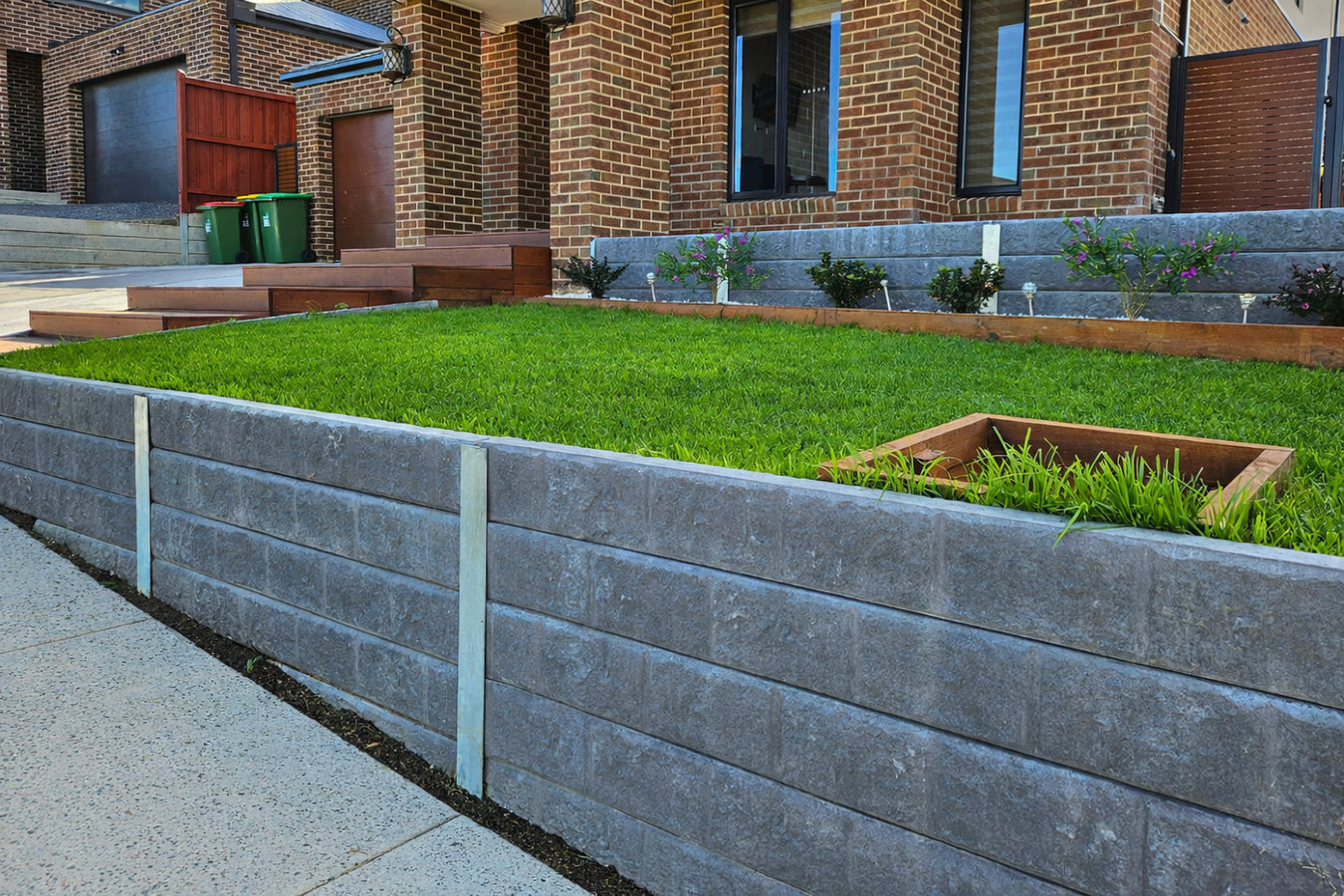
Concrete retaining walls in Crawfordsville hold back soil on sloped or uneven properties, stopping erosion and creating usable flat ground where a hillside used to be - most residential projects take one day to about a week depending on wall length and height.
If your yard has a slope that washes out every spring or a bank that is slowly taking over your lawn, a retaining wall solves the problem permanently. In Crawfordsville, where heavy spring rains hit clay-heavy soils that hold water long after the storm passes, the pressure behind a wall can be significant. A concrete retaining wall built with the right drainage system handles that pressure without failing.
Many homeowners who contact us for retaining walls also ask about concrete floor installation to make use of the new level area a wall creates. We can discuss both during your estimate if your project includes finishing a terrace or patio area behind the wall.
Soil washing down after every rain, bare patches where grass used to grow, or sediment collecting at the bottom of a slope are signs you are actively losing ground. In Crawfordsville's wet springs, erosion accelerates once it starts. A retaining wall stops the loss and stabilizes the slope permanently.
A wall that tilts forward, shows horizontal cracks near the base, or has gaps opening at the joints is under more pressure than it can handle. Freeze-thaw cycles and clay soils are the usual culprits in this region. A leaning wall does not fix itself - it will continue to move until it fails.
Runoff from a slope finding its way toward your foundation or basement is a serious concern. West-central Indiana's heavy spring rains make this a real problem for homes near any kind of grade change. A retaining wall combined with proper grading redirects that water away from your home.
A steep bank that is too uneven to mow safely and too eroded to plant is wasted space. A retaining wall creates a level terrace that turns the slope into a functional outdoor area. Many Crawfordsville homeowners use this to add a patio, garden bed, or lawn space they simply did not have before.
Every retaining wall project starts with a site visit to assess the slope, soil, and drainage before we give you a price. The work itself involves excavating the area, setting a footing that goes below Crawfordsville's frost line, and building the wall with the right reinforcement for its height and load. Behind every wall we install gravel backfill and drainage pipe to carry water away - this drainage layer is what keeps the wall standing through Indiana's wet springs and hard freezes. Homeowners interested in decorating or terracing the new level space may also want to ask about concrete steps construction to access different terrace levels safely.
If your wall meets the height threshold that requires a permit in Crawfordsville, we handle the application with the local building department and schedule the required inspections. You should not have to manage that paperwork yourself. We also walk you through the finished wall at completion - pointing out drainage outlets and explaining what settling in the backfill area looks like in the first season so nothing catches you off guard.
Built from the ground up for homeowners dealing with active erosion, water drainage problems, or a slope they want to turn into usable level ground.
When an existing wall is leaning, failing, or was originally built without proper drainage, we remove it and rebuild with the drainage and footing depth the site actually needs.
Multiple shorter walls stacked in tiers, suited to steeper slopes where a single tall wall would require more complex engineering and deeper footings.
A lower retaining wall along a driveway or path edge holds the soil in place and protects the pavement from crumbling where the grade drops away at the edge.
Crawfordsville sits in west-central Indiana, where the combination of freeze-thaw cycles and clay-heavy glacial soils creates conditions that are genuinely hard on retaining walls. Clay holds water rather than letting it drain, which means the soil behind a wall stays saturated long after a rain or snowmelt. When that water freezes, it expands and pushes. A wall without proper drainage behind it will eventually lean or crack in this climate - not after decades, but often within a few years of installation. The frost line here also means footings need to go deep enough that the wall does not heave as the ground cycles through freezing and thawing each winter. The American Society of Concrete Contractors provides the industry standards we follow for wall construction, drainage, and footing requirements that account for climates like ours.
We serve retaining wall customers throughout Crawfordsville and the region, including Attica and Fountain. Properties near Sugar Creek and other low-lying areas around town often have drainage issues that a well-designed retaining wall and grading plan can address at the same time as stopping erosion.
Describe your slope, roughly how long and tall the wall needs to be, and what problem you are trying to solve. We respond within one business day and schedule a site visit before giving you any price - because slope, soil, and access all affect the cost.
We assess the slope, soil conditions, and drainage during the site visit and determine footing depth, drainage design, and materials. You get a written estimate that includes drainage - not just the wall structure.
We handle any required permits with the local building department. Once approved, the crew excavates to the footing depth needed - below Crawfordsville's frost line - and prepares the base. Equipment access will temporarily disturb the surrounding yard.
The wall goes up after the footing is set and cured. Gravel backfill and drainage pipe are installed behind the wall as it rises. After cleanup and any required inspection, we walk you through the finished wall and explain what to watch for in the first season.
We visit your site, assess the slope and drainage, and give you a written estimate with no pressure. Most retaining wall projects are completed within one to five days once work begins.
(765) 350-1779Every estimate we write includes gravel backfill and drainage pipe behind the wall - not as an optional add-on, but as a standard part of every project. A wall without drainage is a wall that will lean. We do not build walls we would not stand behind.
We set footings below the local frost line so the wall does not heave as the ground freezes and thaws each winter. This is one of the most common steps skipped by contractors who do not work regularly in Indiana's climate - and one of the most common reasons walls fail prematurely.
We handle the permit application with the Crawfordsville building department and coordinate the inspection. You should not have to manage that paperwork. An inspected wall gives you a clear record that the work met local standards - useful if you ever sell the property. Indiana contractor licensing requirements are one more layer of protection you can verify.
We assess existing walls honestly - if a repair makes more sense than a full rebuild, we tell you that. If the drainage behind your old wall has been failing for years and repair is a short-term fix, we explain that too. Our goal is the right project for your situation, not the largest one.
We work in Crawfordsville and the surrounding area regularly and know the soil conditions, frost depth, and permit process specific to Montgomery County. That local knowledge shows up in how we design and build walls that hold through Indiana winters.
Pour a new concrete floor in the level space your retaining wall creates - garages, basements, workshops, and utility areas.
Learn MoreAdd safe, durable steps to connect terrace levels created by a retaining wall or to address grade changes at entries and walkways.
Learn MoreSpring and summer fill up fast - lock in your spot now before the best installation weather is gone and the erosion gets worse.